Singapore Tickets

Plan your visit to Rainforest Wild Asia

Rainforest Wild Asia is Singapore’s newest wildlife adventure park, best known for mixing animal habitats with actual trekking, climbing, and cave-style exploration. This is not a quick zoo loop you finish in an hour — it feels hot, physical in parts, and shaped by route choices that change what you see. The biggest difference between a rushed visit and a good one is mixing the easy boardwalks with a few smart trail detours. This guide covers timing, entrances, pacing, and what to prioritize.

Quick overview: Rainforest Wild Asia at a glance

  • When to visit: Monday–Sunday, 9am–6pm. Tuesday to Thursday from 9am–10:30am is noticeably calmer than weekends from late morning onward, and the cooler first hour gives you a better shot at seeing langurs, deer, and dholes moving instead of sheltering.
  • Getting in: From S$36 for standard entry on weekdays. Guided adventure experiences start from S$192, and booking ahead matters most for weekends, school holidays, and limited-slot Wild Apex or Wild Cavern departures.
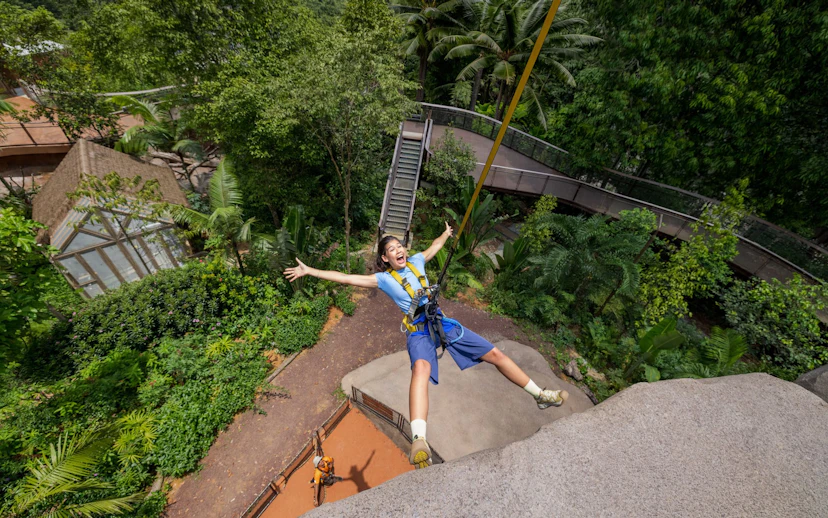
  • How long to allow: 3–4 hours for most visitors. It stretches closer to 5 hours if you add rugged trek sections, stop for lunch in The Cavern, or pay for extra activities like Bounce or Canopy Jump.
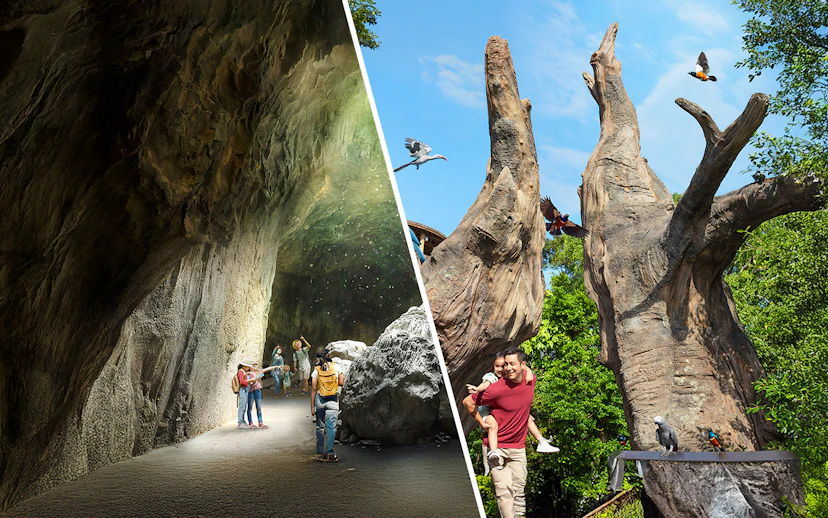
  • What most people miss: The Watering Hole can feature different animals at different times of day, and The Oculus inside The Cavern is one of the park’s best photo spots but gets rushed because people treat the cave as just a cool-down stop.
  • Is a guide worth it? A guide is worth paying for only if you want Wild Apex or Wild Cavern, because the standard park route is easy enough to self-navigate and you’ll get more value from patience and timing than from narration alone.

🎟️ Wild Apex and Wild Cavern slots for Rainforest Wild Asia often sell out a few days in advance during weekends and school holidays. Lock in your visit before the time you want is gone. See ticket options

Jump to what you need

Where and when to go

How do you get to Rainforest Wild Asia?

Address: 20 Mandai Lake Road, Singapore 729825

Open in Google Maps

  • Mandai Shuttle: Khatib MRT Station → 15-min shuttle → short walk to the entrance.
  • Public bus: Bus 138 from Ang Mo Kio MRT → Singapore Zoo Coach Bay → short walk or transfer.
  • Public bus: Bus 927 from Choa Chu Kang MRT → Mandai (weekends/public holidays only).
  • Taxi/rideshare: Direct drop-off at Singapore Zoo or Mandai Wildlife Reserve entrance.
  • Parking: On-site Mandai parking available; arrive before 10am for easier access on weekends.

Taxi/rideshare

Which entrance should you use?

The park uses one main entrance, and the mistake most people make is assuming it works like a big zoo with lots of internal ticketing points — it doesn’t, so sort your ticket before you arrive.

  • Main entrance: Located at the Mandai Wildlife West arrival area. Expect around 5–15 minutes’ wait during weekend mornings, school holidays, and just after rain pauses.

Full entrances guide

When is Rainforest Wild Asia open?

  • Monday–Sunday: 9am–6pm
  • Last entry: 5pm

When is it busiest? Weekends, public holidays, and June, July, and December from about 10:30am–2pm are the busiest, when bridges, photo spots, and shaded rest areas feel the most crowded.

When should you actually go? Go right at opening on a Tuesday, Wednesday, or Thursday if you can, because the first hour is cooler, the trails are easier, and the animals are more active before the heat builds.

The first 90 minutes do the most work here

If you arrive at opening, you’ll do the boardwalks in cooler weather, catch better animal movement at The Karsts and Watering Hole, and avoid hitting The Cavern only when you’re already tired and overheated.

→ Check the complete Rainforest Wild Asia schedule

How much time do you need?

Visit typeRouteDurationWalking distanceWhat you get

Highlights only

Entrance → Canopy Boardwalk → Rock Cascade and Tiger Bridge → The Cavern → exit

2–2.5 hours

~2km

You’ll cover the signature zones and get the park’s overall feel, but you’ll skip most rugged trail sections and probably won’t stay long enough to catch changing activity at the Watering Hole.

Balanced visit

Entrance → Canopy → Watering Hole → one Forest Trek loop → Rock Cascade → The Cavern → exit

3–4 hours

~3.5km

This is the sweet spot for most visitors because it adds the off-road rainforest feel without turning the visit into a full stamina test, and it leaves time for lunch or one paid activity.

Full exploration

Entrance → full boardwalk circuit → multiple trek branches → Watering Hole revisit → Rock Cascade → The Cavern → included challenge elements → exit

4.5+ hours

~5km

You’ll give yourself the best chance of varied sightings and a more complete sense of the park’s design, but the heat, humidity, and uneven ground wear people down faster than they expect.

Which ticket does your route need?

Standard Admission covers all main trails and park highlights, while Wild Apex Adventure and Wild Cavern Adventure require separate tickets. Guided adventure options are ideal if you want access to the Karsts or Cavern experiences without planning complex trekking routes yourself.

→ See guided tour options

Which Rainforest Wild Asia ticket is best for you

Ticket typeWhat's includedBest forPrice range

Rainforest Wild Asia Tickets

Entry to Rainforest Wild Asia · Access to rainforest trails, elevated walkways, wildlife habitats, and ranger presentations

A flexible self-guided visit where you want to explore Singapore’s newest rainforest park at your own pace without combining multiple attractions

From S$49

Mandai Wildlife Destination Pass

Access to multiple Mandai parks, including Rainforest Wild Asia, with bundled savings across selected attractions

Spending a full day or multiple days in Mandai and wanting the freedom to mix rainforest trails, wildlife parks, and immersive nature experiences

From S$118

2-Park Combo: Singapore Zoo + Rainforest Wild Asia

Entry to Singapore Zoo and Rainforest Wild Asia

Pairing classic wildlife encounters with a more immersive rainforest-style adventure in the same visit while reducing separate ticket costs

From S$64.90

2-Park Combo: Bird Paradise + Rainforest Wild Asia

Admission to Bird Paradise and Rainforest Wild Asia

Combining aviaries and free-flight bird habitats with forest trekking and canopy-style exploration for a nature-focused itinerary

From S$62

2-Park Hopper: River Wonders + Rainforest Wild Asia

Entry to River Wonders and Rainforest Wild Asia

Experiencing two contrasting ecosystems in one day, from freshwater habitats and giant pandas to dense rainforest landscapes and walking trails

From S$62.50

The Watering Hole changes through the day — and most visitors never circle back

If you only stop once, you can miss one of the park’s smartest ideas: rotating species in the same habitat. Revisit it after The Cavern, and you may get a completely different sighting window than you had earlier.

How do you get around Rainforest Wild Asia?

Rainforest Wild Asia is spread across multiple zones, and most visitors need around 3 hours for the highlights or 4+ hours for a fuller visit. The smart crowd-flow move is to use the elevated boardwalk early, then branch into rugged trails only where they add something you won’t get from above.

How do you get around Rainforest Wild Asia?

  • The Canopy: Elevated boardwalks and treetop views → 30–45 minutes → the easiest place to settle into the park without burning energy early.
  • The Karsts: Limestone outcrops, viewpoints, and François’ langurs → 30–45 minutes → best done before the midday heat if you want active wildlife and clearer views.
  • Watering Hole: Rotating habitat zone for dholes, babirusa, and occasional sun bear sightings → 20–30 minutes → worth revisiting later because the animal mix can change.
  • Rock Cascade: Tiger habitat and Tiger Bridge → 20–30 minutes → short on distance, but worth slowing down because the tiger often blends into the rocks and vegetation.
  • The Cavern: Cave route, Oculus, and dining stop → 30–45 minutes → the best place to cool off and reset in the middle of the visit.

Suggested route: Start with the boardwalk and The Karsts while the weather is cooler, cut down to the Watering Hole before lunch, then use The Cavern as your mid-visit break before deciding whether you still have the energy for trek branches or paid activities.

Maps and navigation tools

  • Map: Digital park map → covers boardwalks, trek branches, rest stops, and activity points → save it before arrival from the official Rainforest Wild Asia page or Mandai app.
  • Signage: Wayfinding is good on the main route, but the trek spurs are easier to undershoot or skip unless you’re watching the signs closely.
  • Audio guide/app: The Mandai app is more useful for timing, wayfinding, and checking what’s nearby than for replacing the experience with constant narration.
  • Large outdoor POIs only: A saved screenshot of the map works better than relying on mobile data in the middle of a hot walk, and guided adventure options make the hardest routes much simpler.

💡 Pro tip: Do the boardwalk route before you try any rugged branches — once you’re sweaty and tired, people start skipping the exact trail detours that make this park feel different from a normal zoo.

Which animals and habitats should you prioritise?

Francois langurs at The Karsts
Malayan tiger at Rock Cascade
Red dholes at the Watering Hole
Babirusa at the Watering Hole
Javan langurs and deer in The Canopy
The Oculus inside The Cavern
1/6

François’ langurs at The Karsts

Species: François’ langur

These are one of the park’s most distinctive sightings and one of the easiest ways to understand what makes Rainforest Wild Asia different. The black-and-orange langurs move through the limestone setting in a way that feels much closer to a real habitat encounter than a standard enclosure view. Most visitors look up once, take a photo, and move on too fast — stay a few minutes and you’ll often catch the group shifting between rock faces and trees.

Where to find it: Around the elevated routes and viewpoints in The Karsts.

Malayan tiger at Rock Cascade

Species: Malayan tiger

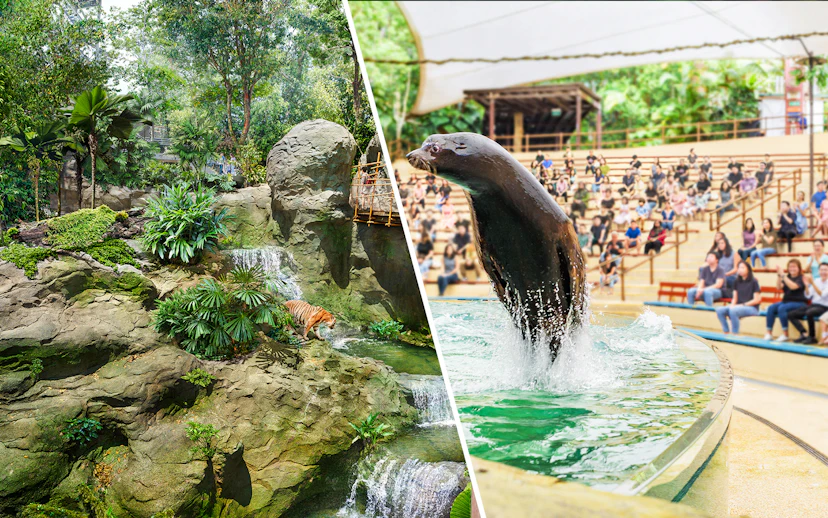
Rock Cascade is where the park’s ‘wild encounter’ idea either lands for you or it doesn’t. The tiger habitat uses rocks, foliage, and water so well that the animal can look almost invisible until it moves, which is exactly why this stop rewards patience. What most people miss is the lower line of sight from the bridge itself — don’t just scan the obvious waterfall area.

Where to find it: Rock Cascade, best viewed from Tiger Bridge and the nearby lookout points.

Red dholes at the Watering Hole

Species: Dhole

The dholes are one of the liveliest species in the park when they’re out, and they add real energy to a stop that many visitors treat as just another scenic clearing. Because the habitat rotates, timing matters more here than at fixed enclosures elsewhere in Singapore. Most people don’t realize the same space can feature different animals later in the day, so they never return after a quick first look.

Where to find it: The Watering Hole clearing along the main route and trek connections.

Babirusa at the Watering Hole

Species: Babirusa

If the dholes bring movement, the babirusa bring the ‘you’d never expect to see this here’ factor. Their unusual curved tusks and mud-loving behavior make them more memorable than the average hoofed-animal stop, especially if you catch them wallowing or moving through the habitat. Most visitors only pass once, so they miss the rotation that makes this one of the park’s smartest repeat stops.

Where to find it: The Watering Hole, often later in the day after other species have rotated out.

Javan langurs and deer from The Canopy

Species / habitat: Javan langurs and Philippine spotted deer

The Canopy is one of the best examples of how the park uses vertical space. Up top, you’re eye-level with langurs moving through the branches; below, you can sometimes spot deer grazing through the foliage, which gives the whole zone real depth. Most people treat this as a transit section, but it’s better used as a slow observation area when the morning light is still soft.

Where to find it: Along the elevated boardwalks in The Canopy zone.

The Cavern and The Oculus

Habitat: Subterranean cave environment

This is not an animal-heavy stop, but it is one of the park’s most memorable environments and easily worth prioritizing. The cave route changes the rhythm of the visit, gives you a genuine break from the heat, and ends with The Oculus — a circular opening that frames the forest above in a way most people remember long after the animal sightings blur together. What people rush past is the low-light detail in the rockwork and chambers before the photo moment.

Where to find it: The Cavern, below ground, with The Oculus near the central opening.

The Watering Hole changes through the day — and most visitors never circle back

If you only stop once, you can miss one of the park’s smartest ideas: rotating species in the same habitat. Revisit it after The Cavern, and you may get a completely different sighting window than you had earlier.

Facilities and accessibility

  • 🎒 Bags: A small backpack works best here because the rugged trails, bridges, and optional climbing elements get awkward with bulky bags.
  • 🚻 Restrooms: Restrooms are easiest to access from the main route and dining areas, so use them before committing to a longer trek branch.
  • 🍽️ Cafes and restaurants: The Cavern Restaurant is the main sit-down dining stop and the most practical mid-visit break, though many visitors find on-site food pricey for a park meal.
  • 💧 Water refill stations: Refill points are available and genuinely useful because this is one of those attractions where you notice the heat fast.
  • 🪑 Seating and rest areas: Sheltered rest stops along the elevated boardwalk matter more than they sound because the humidity builds even on easy sections.
  • 🅿️ Parking: Shared Mandai parking serves the park, and the shortest walk-in spaces are easier to get if you arrive before the late-morning weekend rush.
  • Mobility: The elevated boardwalk route is stroller- and wheelchair-friendly with gentler gradients and regular rest points, but rocky trails, ladders, log crossings, and stream sections are not.
  • 👁️ Visual impairments: The easiest route is the main boardwalk because dense planting, low-contrast habitats, and the dim Cavern make animal spotting harder than in a conventional zoo layout.
  • 🧠 Cognitive and sensory needs: Early morning is the calmest window, while the loudest and busiest pockets are around the jump, bounce, bridges, and school-group peaks near midday.
  • 👨‍👩‍👧 Families and strollers: Strollers work well on the accessible route end to end, but you’ll want to leave them before any trail branch that includes rocks, narrow paths, or uneven footing.

Rainforest Wild Asia works best for kids who like movement, animals, and a bit of challenge; younger children can enjoy the boardwalks, but the full park can feel long and humid if you try to do everything.

  • 🕐 Time: Around 2.5–3.5 hours is realistic with children, and the smartest family version is the boardwalk, Watering Hole, Tiger Bridge, The Cavern, and one paid activity rather than every trail.
  • 🏠 Facilities: The accessible route, rest stops, refill points, and indoor cave break make the park much easier with children than the rugged branding first suggests.
  • 💡 Engagement: Tell kids to look high and low at every stop — langurs often reward the people watching the trees, while deer and smaller details get missed near ground level.
  • 🎒 Logistics: Bring water, a change of shirt, and shoes with grip, and aim for opening time before the heat makes the fun sections feel like hard work.
  • 📍 After your visit: Mandai Wildlife West is the easiest child-friendly follow-up because it lets everyone decompress before you tackle another park or head back to the city.

Rules and restrictions

What you need to know before you go

  • Entry requirement: Book a dated ticket for general admission, and reserve a timed slot separately if you’re doing Wild Apex or Wild Cavern.
  • Bag policy: Small bags are fine, but large or heavy ones make the trek sections, ladders, and bridges much harder than they need to be.
  • Re-entry policy: Tickets are single-entry, so once you leave, your visit is over for the day.
  • Dress note: Closed-toe shoes and light, quick-dry clothes are the smart choice here because this park behaves more like a humid walk than a flat indoor attraction.

Not allowed

  • 🚫 Food and drinks are best kept to dining and rest areas rather than carried through trek lines and narrow bridges.
  • 🚭 Smoking and vaping don’t belong on the trails, in The Cavern, or near animal habitats.
  • 🐾 Pets are not part of the regular park experience, and any assistance-animal access should follow reserve policy before arrival.
  • 🖐️ Climbing over habitat barriers or leaving marked trails is not allowed, even when the setting feels more like a forest hike than a zoo.

Photography

Photography is allowed in most outdoor areas, and this is a park where you’ll want your camera ready rather than packed away. Keep flash off around animals, and be extra careful on bridges and narrow trail sections where stopping dead blocks the route. Tripods and bulky camera setups are a poor fit for the moving, shared-path layout, and phones or loose gear should be secured before any jump, bounce, or guided adventure activity.

Good to know

  • The Watering Hole uses rotating animal habitats, so one quick pass does not show you the full experience there.
  • Outdoor add-ons can pause in thunderstorms, which matters if you’re saving Bounce or Canopy Jump for the end of your visit.
Once you leave Rainforest Wild Asia, you cannot re-enter

⚠️ Re-entry is not permitted once you exit Rainforest Wild Asia. Plan meals, restroom stops, and paid activities before leaving. The Mandai hub is only a short walk away, but stepping out means your park visit is finished for the day.

Practical tips

  • Booking and arrival: Book standard tickets at least 1–3 days ahead for weekends and school holidays, and lock in Wild Apex or Wild Cavern earlier because departures are limited and far smaller than general park capacity.
  • Pacing: Use your fresher energy on The Karsts or any rugged trail branch first, because people often waste their best hour on easy walking and then skip the more interesting terrain once the heat hits.
  • Crowd management: Tuesday to Thursday right at 9am is the best window here, not because the park is empty, but because the first hour combines cooler weather, calmer bridges, and better animal movement.
  • What to bring or leave behind: Bring a refillable bottle, a small towel, and shoes with real grip, and leave behind bulky bags because even short trek sections feel clumsy with extra weight.
  • Food and drink: If you want a proper sit-down break, time The Cavern Restaurant for late morning or early lunch, because waiting until peak lunch hour means paying high park prices when you’re already hot and low on patience.
  • Weather prep: Pack a light poncho rather than a heavy umbrella, since sudden showers are common and umbrellas become annoying the moment you’re on a narrow path or bridge.
  • Add-on strategy: Don’t save Bounce or Canopy Jump for the very end if they matter to you, because weather holds later in the day can wipe out the exact activity you were counting on.

What else is worth visiting nearby?

Commonly paired: Bird Paradise

Distance: 400m — around 5 minutes on foot
Why people combine them: It’s the easiest same-area pairing, and the contrast works well — Bird Paradise is more structured and visual, while Rainforest Wild Asia feels wilder and more physical.
Book / Learn more

Commonly paired: Night Safari

Distance: 1km — around 5 minutes by shuttle or 15 minutes on foot
Why people combine them: Rainforest Wild Asia works well by day, and Night Safari gives you a completely different wildlife experience after dark without changing districts or burning extra travel time.
Book / Learn more

Also nearby

Singapore Zoo
Distance: 1.5km — around 15 minutes on foot or a short internal transfer
Worth knowing: Choose this if you want a more traditional, animal-heavy wildlife park with easier visibility and less physical effort.

River Wonders
Distance: 1.2km — around 5 minutes by shuttle
Worth knowing: This is the easiest nearby add-on if you want a shorter, calmer second attraction after a sweaty rainforest walk.

Eat, shop and stay near Rainforest Wild Asia

  • On-site: The Cavern Restaurant, inside The Cavern, is the main full-meal stop and worth it more for the cave setting and mid-visit cooldown than for bargain pricing.
  • Mandai dining area: The shared Mandai hub near the wildlife parks gives you more flexibility than eating deep inside the park, especially if you’re pairing Rainforest Wild Asia with Night Safari later.
  • Post-visit meal plan: If you’re price-sensitive, it makes more sense to refuel after you leave Mandai than to treat the park cafés as a destination food stop.
  • 💡 Pro tip: Eat an early lunch or a late lunch here — the setting is most enjoyable when you use it as a cool-down break, not when you arrive starving at the busiest part of the day.
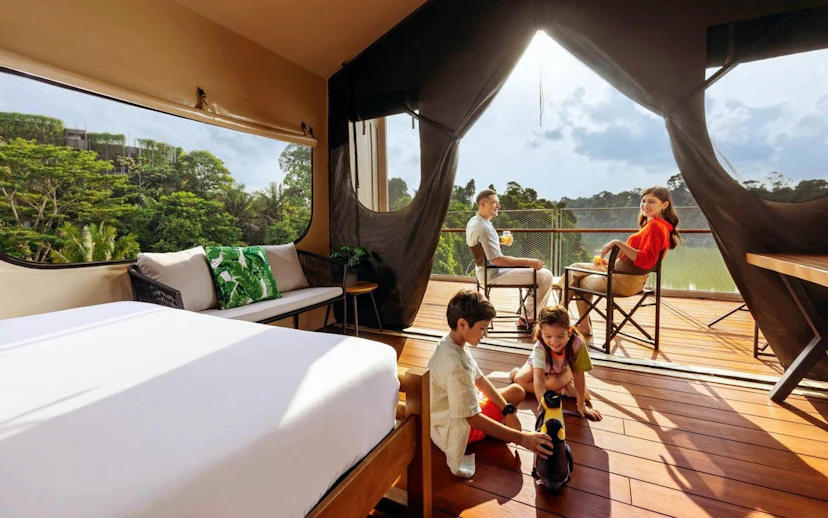
  • Price point: The area skews toward purpose-led stays rather than broad hotel choice, so you’ll usually pay for convenience rather than neighborhood value.
  • Best for: Travelers planning back-to-back Mandai park days, families who want less commuting, and visitors pairing Rainforest Wild Asia with Night Safari.
  • Consider instead: Orchard, Marina Bay, or the Civic District are better for most travelers because you keep easier access to the rest of Singapore and can still reach Mandai in about 25 minutes by car.

Frequently asked questions about visiting Rainforest Wild Asia

Most visits take 3–4 hours. You can finish in about 2–2.5 hours if you stick to the boardwalk highlights, but once you add rugged trails, lunch in The Cavern, or paid activities like Bounce or Canopy Jump, you’ll be closer to 4–5 hours.